
EPDM and silicone both show up constantly in expansion joint specifications, and they get compared as if choosing between them were a single decision. In practice they usually aren’t competing for the same joint — they solve different problems, and understanding which is which prevents both overspecification and premature failure.
What they actually are
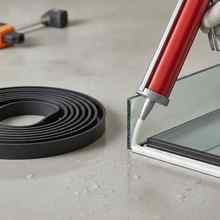
EPDM (ethylene propylene diene monomer) in expansion joint work is almost always a pre-formed, extruded rubber seal profile — a compression seal or a wall-to-wall sealing strip installed as a physical component. Silicone, by contrast, is typically a liquid-applied sealant, gunned into a joint and cured in place. That distinction alone answers a lot of “which is better” questions before material chemistry even enters the picture: a large-movement structural expansion joint needs a purpose-engineered seal profile, not a bead of sealant.
UV and ozone resistance
Both materials perform well here, which is part of why they’re both common in exposed applications. EPDM has an exceptionally long track record in outdoor industrial and roofing use specifically because of its ozone and UV stability — it’s the material class roofing membranes have relied on for decades. Silicone is also genuinely UV-stable and is often the preferred sealant for glazing and façade joints exposed to constant sun. Neither is the weak point in a well-specified system exposed to Indian sun.
Temperature range and heat cycling
Silicone sealants typically hold flexibility across a wider absolute temperature range than EPDM, which matters more in extreme climates than in most of India. What matters more locally is repeated heat-cool cycling — a joint that goes from intense daytime concrete surface heat to cooler nights, day after day, for years. EPDM’s compression-seal format handles this cycling by design: the seal is engineered to compress and recover through the joint’s full designed movement range, repeatedly, without the material itself needing to stretch and rebound the way a sealant bead does.
Movement capacity
This is where the two genuinely diverge for expansion joint use. A properly sized EPDM compression seal is rated for a specific, engineered movement range as part of the joint design — see our guide on calculating movement capacity for a building expansion joint for how that number gets set. Silicone sealant, while flexible, is generally specified for smaller movement joints (movement capability commonly cited around ±25% of joint width, product-dependent) — well short of what a large structural expansion joint in a parking deck or podium needs.
Where each is genuinely the right choice
- EPDM compression/extruded seals — structural expansion joints with real, engineered movement: floor-to-floor joints, podium and parking-deck joints, wall-to-wall joints, anywhere the gap is doing continuous mechanical work, not just sealing a static gap. See Dseal’s EPDM Compression Seals range for the product side of this.
- Silicone sealant — glazing joints, smaller façade movement joints, perimeter sealing around windows and cladding, and any joint where the primary requirement is a weatherproof seal rather than absorbing significant structural movement.
The practical takeaway
Don’t treat this as a head-to-head material contest. Identify what the joint actually needs to do — how much movement, what kind of movement, what’s structurally happening on either side of the gap — and the material class follows from that, not the other way round. A joint that’s failing prematurely is more often a sign of the wrong product category for the application than a flaw in either material itself.
Leave a Reply