
0
Your shortlist×

Category: Technical Guides

  • EPDM vs Silicone Expansion Joint Seals: Which Lasts Longer in Indian Climates?

    EPDM vs Silicone Expansion Joint Seals: Which Lasts Longer in Indian Climates?

    EPDM and silicone both show up constantly in expansion joint specifications, and they get compared as if choosing between them were a single decision. In practice they usually aren’t competing for the same joint — they solve different problems, and understanding which is which prevents both overspecification and premature failure.

    What they actually are

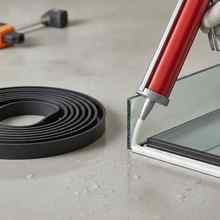
    EPDM (ethylene propylene diene monomer) in expansion joint work is almost always a pre-formed, extruded rubber seal profile — a compression seal or a wall-to-wall sealing strip installed as a physical component. Silicone, by contrast, is typically a liquid-applied sealant, gunned into a joint and cured in place. That distinction alone answers a lot of “which is better” questions before material chemistry even enters the picture: a large-movement structural expansion joint needs a purpose-engineered seal profile, not a bead of sealant.

    UV and ozone resistance

    Both materials perform well here, which is part of why they’re both common in exposed applications. EPDM has an exceptionally long track record in outdoor industrial and roofing use specifically because of its ozone and UV stability — it’s the material class roofing membranes have relied on for decades. Silicone is also genuinely UV-stable and is often the preferred sealant for glazing and façade joints exposed to constant sun. Neither is the weak point in a well-specified system exposed to Indian sun.

    Temperature range and heat cycling

    Silicone sealants typically hold flexibility across a wider absolute temperature range than EPDM, which matters more in extreme climates than in most of India. What matters more locally is repeated heat-cool cycling — a joint that goes from intense daytime concrete surface heat to cooler nights, day after day, for years. EPDM’s compression-seal format handles this cycling by design: the seal is engineered to compress and recover through the joint’s full designed movement range, repeatedly, without the material itself needing to stretch and rebound the way a sealant bead does.

    Movement capacity

    This is where the two genuinely diverge for expansion joint use. A properly sized EPDM compression seal is rated for a specific, engineered movement range as part of the joint design — see our guide on calculating movement capacity for a building expansion joint for how that number gets set. Silicone sealant, while flexible, is generally specified for smaller movement joints (movement capability commonly cited around ±25% of joint width, product-dependent) — well short of what a large structural expansion joint in a parking deck or podium needs.

    Where each is genuinely the right choice

    • EPDM compression/extruded seals — structural expansion joints with real, engineered movement: floor-to-floor joints, podium and parking-deck joints, wall-to-wall joints, anywhere the gap is doing continuous mechanical work, not just sealing a static gap. See Dseal’s EPDM Compression Seals range for the product side of this.
    • Silicone sealant — glazing joints, smaller façade movement joints, perimeter sealing around windows and cladding, and any joint where the primary requirement is a weatherproof seal rather than absorbing significant structural movement.

    The practical takeaway

    Don’t treat this as a head-to-head material contest. Identify what the joint actually needs to do — how much movement, what kind of movement, what’s structurally happening on either side of the gap — and the material class follows from that, not the other way round. A joint that’s failing prematurely is more often a sign of the wrong product category for the application than a flaw in either material itself.

  • How to Calculate Movement Capacity for a Building Expansion Joint

    How to Calculate Movement Capacity for a Building Expansion Joint

    Undersized expansion joints fail prematurely, while oversized systems waste resources. Accurate movement capacity calculation is essential for specifying the right joint system. This article demonstrates the calculation process with a worked example.

    Understanding the Basic Formula

    The fundamental equation for thermal movement in building expansion joints is:

    ΔL = α × L × ΔT

    Where:

    • ΔL = Total movement (mm)
    • α = Coefficient of thermal expansion (per °C)
    • L = Length between joints or from fixed point (m)
    • ΔT = Temperature variation (°C)

    Worked Example: Office Building in Delhi

    Consider a reinforced concrete office building with the following parameters:

    • Material: Reinforced concrete
    • Joint spacing: 45 meters
    • Location: Delhi NCR
    • Exposure: Rooftop expansion joint on terrace slab

    Step 1: Determine the Thermal Coefficient

    For reinforced concrete, the coefficient of thermal expansion typically ranges from 10 to 12 × 10⁻⁶ per °C. IS 456:2000 suggests using 11 × 10⁻⁶ per °C for design purposes. We’ll use α = 0.000011 per °C.

    Step 2: Establish Temperature Range

    Delhi experiences significant temperature variation:

    • Peak summer surface temperature: 65°C (exposed concrete terrace)
    • Minimum winter temperature: 5°C
    • Total swing (ΔT): 60°C

    Note that surface temperatures of exposed concrete often exceed ambient air temperature by 15-20°C during summer months due to solar radiation. For interior joints or shaded locations, use a reduced temperature swing of 20-30°C.

    Step 3: Calculate Total Movement

    Applying the formula:

    ΔL = 0.000011 × 45,000 mm × 60°C = 29.7 mm

    This represents movement in one direction from the neutral temperature. Total joint movement capacity must accommodate both expansion and contraction.

    Step 4: Apply Safety Factor

    Account for additional movement sources and calculation uncertainties:

    • Creep and shrinkage: Add 15-25% for concrete structures
    • Construction tolerances: Add 10-15%
    • Seismic provisions: Add per IS 1893 requirements if applicable

    For this example, applying a 25% safety margin:

    Required movement capacity = 29.7 × 1.25 = 37.1 mm

    Specify a joint system rated for ±40 mm movement capacity to provide adequate safety margin.

    Material-Specific Coefficients

    Different building materials require different coefficients:

    MaterialCoefficient (× 10⁻⁶ per °C)
    Reinforced Concrete10-12
    Structural Steel11-13
    Aluminum23-24
    Granite/Stone5-8
    Brick Masonry5-7

    Regional Temperature Considerations

    Temperature swings vary significantly across India:

    • North India (Delhi, Jaipur): 60-70°C for exposed surfaces
    • Coastal regions (Mumbai, Chennai): 40-45°C
    • Moderate climates (Bangalore, Pune): 35-40°C
    • High-altitude locations: Increased range due to altitude effects

    Always consider local climate data and surface exposure conditions. NBC 2016 provides regional climate zone classifications that inform these calculations.

    Common Calculation Errors to Avoid

    • Using ambient temperature instead of surface temperature for exposed joints
    • Forgetting to convert units (use consistent mm or m throughout)
    • Ignoring cumulative movement in buildings with multiple expansion joints
    • Neglecting to account for construction sequence and installation temperature
    • Failing to consider differential movement between dissimilar materials

    Installation Temperature Adjustment

    The joint installation temperature affects the neutral position. If installed at 30°C, the joint will see more expansion (toward 65°C) than contraction (toward 5°C). Manufacturers like Dseal provide installation guidelines specifying the required gap width at various temperatures to ensure the joint operates within its rated capacity throughout its service life.

    Need assistance sizing expansion joints for your project? Our technical team can help verify your calculations and recommend appropriate systems. Request a quote with project details for expert guidance on expansion joint selection.

    MK Dhawan, Chairman & Managing Director, Dseal

DHAWAN GROUP · 35+ years in waterproofing & expansion joint solutions
11/155, Major Mohit Sharma Marg, Sector 3, Rajendra Nagar, Sahibabad, Ghaziabad 201005 · +91 93109 97953 · [email protected]